DOW-UAP-D183
-Correspondence from Senator Harry Reid, June 2009
- Agency
- Department of War
- Format
- Document, 4 pages
- Incident date
- 6/24/09
- Place
- Washington, D.C.
- Released
- Release 08, November 20, 2026
- Source
- war.gov
- Topics
- AAWSAP / AATIP, Correspondence
Description from war.gov
Page 1
HARRY REID NEVADA MAJORITY LEADER United States Senate WASHINGTON. DC 20510-7012 June 24, 2009 lionorable William Lynn III Deputy Sccretary of Defense 1010 Detense Pentagon Washingion. DC 20301-1010 Dear Secretary Lynn: Beginning this past September, the U.S. Senate has mandated that the Defense Intelligence Agency assess far-term foreign advanced aerospace threats to the United States. The scope of program interest covers from the present out to forty years and beyond. In order to further our effort in recognizing emerging disruptive aerospace technologies, technical studies are being conducted in regard to advanced lift, propulsion, the use of unconventional materials and controls, signature reduction, weaponry, human interface and human effects Since the Advanced Aerospace Threat and Identification Program (AAITP) and study were first commissioned, much progress has been made with the identification of several highly sensitive, unconventional aerospace-related findings. Given the current rate of success, the continued study of these subjects will likely lead to technology advancements that in the immediate near-crm will require extraordinary protection. Due to the sensitivities of the information surrounding aspecis of this program, I require your assistance in establishing a Restricted Special-Access-Program (SAP) with a Bigoted Access List for specitic portions of the АА ГІР In order to support this national effort, a small but highly specialized cadre of Department of Defense (DoD) and private sector individuals are necessary. These individuals must be specialized in the arcas of advanced sciences, sensors, intelligence/counterintelligence, and advanced acrospace engineering. Given the likelihood that these technologies will be applied to future systems involving space flight, weapons, communications, and propulsion, the standard management and safeguarding procedures for classified information are not sufficient. Even the use of conventional SAP protocols will not adequately ensure that all aspects of the project arc properly secured. Although not every aspect of AATIP requires Restricted SAP read-on, the tollowing portions should be maintained at the Restricted SAP level: • The methodology used to identify, acquire, study, and engincer the advanced technologies associated with AATIP. • Specific methodologies used to study unconventional technology may require nuanced approaches that will undoubtedly be of significant interest if not a top priority for adversarial Foreign Intelligence Scurity Services (FISS).Page 2
lindue attention by government, or private sector entities, not involved in AA TIP or any international interest will directly or indirectly interfere with the daily AATIP mission and perhaps threaten the overall success of the program. • Allocation of personnel, support, and oversight. o Due to the highly specialized nature of the personnel involved with AATIP, the overt acknowledgement of their participation in the program will lead to an unnecessary security and counterintelligence risk. • Occasional assistance from specialized individuals within Dol), the scientific community, or academia may be necessary from time to time based on demonstrated subject matter expertise. Adequate protection of their identities or affiliation is critical to avoid unnecessary scrutiny. Without the appropriate Restricted SAP protection, the cost associated with a compromise would be significantly higher than the cost associated with a properly administered Restricted SAP. o Protection of industry partnerships and participation is critical. Public awareness of an industry's AATIP affiliation may discourage that industry's further participation with the U.S. Govemment in this program. • Application and engineering. • The nuanced manner in which some of these technologies will be collected, engineered and applied by the U.S. may require senior level government approval. These decision makers must be afforded the necessary time to make strategic decisions by restricting access to the "big picture" or overall intent of the program to those on a strict Bigoted List. • Associated exotic technologies likely involve extremely sophisticated concepts within the world of quantum mechanics, nuclar science, clectromagnetic theory, gravitics, and thermodynamics. Given that all of these have the potential to be used with catastrophic effects by adversaries, an unusually high degree of operational security and read-on discretion is required Due to the expertise required to carry out the objectives of this program, we will require a small, specialized group of DoD personnel, who are dedicated to performing the SAP-related functions and executing programmatic requirements within the program. It is essential that the Government & military personnel who are already involved with this program arc assigned lo further support this program in a Restricted SAP capacity (see Attachment 1). These individuals all currently possess the appropriate scurity cicarances and are arcady providing unique support to AATIPPage 3
Liltimately, the results of AA TIP will not only benefit the L.S. Govemment but I believe will directly benefit DoD in ways not yet imagined. The technological insight and capability gained will provide the L.S. with a distinct advantage over any foreign threats and allow the U.S. to maintain its preeminence as a world leader. Thank you in advancefrom your time and consideration of this request. If you or your staff have any questions, please contact 1843(a)(2) of my staff at 1843(a)(2) Sincerely, Yang hend United States Senator HR:1thPage 4
Attachment 1 Sponsoring Agency: Undetcrimined (DEPSECDEF) Component-level SAP Central Office: Undetermined (DEPSECDEF) Unclassified Nickname: Advanced Acrospace Threat Identification Program (AATIP) Program Length: FY09-HY 13 (Preliminary) Program Funding: FY09-0&M, FY10-FY 13-TBD SAP Category Designation: Intelligence, DoD Acquisition FY 10 Preliminary Bigoted List of Corernment Personnel: 1. Honorable William Lynn III, Deputy Secretary of Defense (Gov't) 2. Honorable Senator Harry Reid of Nevada (Gov't) 3. Honorable Senator Daniel Inouye of Hawaii (Govt) 4. Robert I. Herbert (U.S. Scate) 5 AAP Person 1 (Gov't) 6. AAP Person 2 (Govt) 7. AAP Person 91 J(Gov't) 8. AAP Person 92 (L'SN) 9. AAP Person 93 7(USMC) 10. AAP Person 3 11. JAAP Person 94 (Gov't) (Giovt) FY 10 Preliminary Bigoted List of Contractor Personnel funded under the AATIP: 1. AAP Person 4 (CTR) 2. AAP Person 7 3. AAP Person 57 Bigelow Acrospace Advanced Space Studies LLC (BAASS). BAASS (CTR) BAASS (CIR) This document contains information exempt from mandatory disclosure under the FOlA. Exemptions 1 and 5 apply.The text is machine-read (OCR) from the scan and can contain errors. The scan is the record.
Machine summary
Written by Claude Sonnet 5.5 (Anthropic) on November 20, 2026, from the record's text and war.gov's description. It is not part of the record and can contain errors; check it against the document.
This is a June 24, 2009 letter from Senator Harry Reid (D-NV), then Senate Majority Leader, to Deputy Secretary of Defense William Lynn III, with a one-page attachment. It is held by the Department of War and relates to the DIA-administered Advanced Aerospace Weapon System Applications Program (AAWSAP). Reid says the Senate directed DIA to assess far-term foreign aerospace threats, out to forty years and beyond, and that technical studies cover lift, propulsion, unconventional materials, signature reduction, weaponry, and human effects. He asks that parts of the effort, called AATIP in the letter, be placed under a Restricted SAP with a "Bigoted Access List." Attachment 1 proposes a preliminary structure: FY09 to FY13 timeline, O&M funding for FY09 with later years TBD, and a FY10 access list of government and Bigelow Aerospace Advanced Space Studies (BAASS) contractor personnel.
The letter is a primary-source link between congressional direction and the AAWSAP/AATIP program, and AARO's comment treats AATIP as an alternate name for AAWSAP. It claims "highly sensitive, unconventional" findings but gives no specifics. Most personnel names on the access list are replaced by placeholders ("AAP Person 1", etc.), with Lynn, Reid, Sen. Daniel Inouye, and Robert Herbert named. A staff contact is redacted under FOIA exemptions 1 and 5. OCR errors affect the text, including "AAITP" and "Bigoted," which the description reproduces as written.
Most frequent words
Select one to highlight it in the text above.
Related records
Paired by war.gov 60
Records war.gov itself pairs with this one.
-
 DOW-UAP-D110 AAWSAP Statement of Objectives, July 2008
7/18/08
-
 DOW-UAP-D111 AAWSAP Solicitation and Original Order, September 2008
9/22/08
-
 DOW-UAP-D112 AAWSAP Contract Modification P00001, September 2009
9/2/09
-
 DOW-UAP-D113 AAWSAP Contract Modification P00002, February 2010
2/2/10
-
 DOW-UAP-D114 AAWSAP Contract Modification P00003, May 2010
5/18/10
-
 DOW-UAP-D115 AAWSAP Contract Modification P00004, May 2010
5/18/10
-
 DOW-UAP-D116 AAWSAP Contract Modification P00005, September 2010
9/28/10
-
 DOW-UAP-D117 AAWSAP DIRD, Metallic Glasses for Aerospace Applications, December 2009
12/14/09
-
 DOW-UAP-D118 AAWSAP DIRD, Aerospace Applications of Programmable Matter, December 2009
12/14/09
-
 DOW-UAP-D119 AAWSAP DIRD, Biomaterials, January 2010
1/7/10
-
 DOW-UAP-D120 AAWSAP DIRD, Materials for Advanced Aerospace Platforms, January 2010
1/12/10
-
 DOW-UAP-D121 AAWSAP DIRD, Pulsed High-Power Microwave Source Technology, January 2010
1/28/10
-
 DOW-UAP-D122 AAWSAP DIRD, Invisibility Cloaking Theory and Experiments, March 2010
3/2/10
-
 DOW-UAP-D123 AAWSAP DIRD, Positron Aerospace Propulsion, March 2010
3/2/10
-
 DOW-UAP-D124 AAWSAP DIRD, Space Access: Where We’ve Been and Where We Could Go, March 2010
3/8/10
-
 DOW-UAP-D125 AAWSAP DIRD, Inertial Electrostatic Confinement Fusion, March 2010
3/10/10
-
 DOW-UAP-D126 AAWSAP DIRD, Advanced Nuclear Propulsion for Manned Deep Space Missions, March 2010
3/11/10
-
 DOW-UAP-D127 AAWSAP DIRD, An Introduction to the Statistical Drake Equation, March 2010
3/11/10
-
 DOW-UAP-D128 AAWSAP DIRD, Anomalous Acute and Subacute Field Effects on Human Biological Tissues, March 2010
3/11/10
-
 DOW-UAP-D129 AAWSAP DIRD, Metallic Spintronics, March 2010
3/23/10
-
 DOW-UAP-D130 AAWSAP DIRD, Technological Approaches to Controlling External Devices, March 2010
3/23/10
-
 DOW-UAP-D131 AAWSAP DIRD, The Role of Superconductors in Gravity Research, March 2010
3/23/10
-
 DOW-UAP-D132 AAWSAP DIRD, Advanced Space Propulsion Based on Vacuum (Spacetime Metric) Engineering, March 2010
3/29/10
-
 DOW-UAP-D133 AAWSAP DIRD, The Space Communication Implications of Quantum Entanglement and Nonlocality, March 2010
3/30/10
-
 DOW-UAP-D134 AAWSAP DIRD, Maverick Inventor Versus Corporate Inventor: Where Will the Next Major Innovations Arise, March 2010
3/30/10
-
 DOW-UAP-D135 AAWSAP DIRD, Antigravity for Aerospace Applications, March 2010
3/30/10
-
 DOW-UAP-D136 AAWSAP DIRD, Biosensors and BioMEMS: A Survey of the Present Field, March 2010
3/31/10
-
 DOW-UAP-D137 AAWSAP DIRD, State of the Art and Evolution of High-Energy Lasers, March 2010
3/31/10
-
 DOW-UAP-D138 AAWSAP DIRD, Warp Drive, Dark Energy, and the Manipulation of Extra Dimensions, April 2010
4/2/10
-
 DOW-UAP-D139 AAWSAP DIRD, Traversable Wormholes, Stargates, and Negative Energy, April 2010
4/6/10
-
 DOW-UAP-D140 AAWSAP DIRD, High-Frequency Gravitational Wave Communications, April 2010
4/6/10
-
 DOW-UAP-D141 AAWSAP DIRD, Metamaterials for Aerospace Applications, April 2010
4/6/10
-
 DOW-UAP-D142 AAWSAP DIRD, Concepts for Extracting Energy from the Quantum Vacuum, April 2010
4/6/10
-
 DOW-UAP-D143 AAWSAP DIRD, Laser Lightcraft Nanosatellites, November 2010
11/1/10
-
 DOW-UAP-D144 AAWSAP DIRD, Cockpits in the Era of Breakthrough Flight, November 2010
11/1/10
-
 DOW-UAP-D145 AAWSAP DIRD, Aneutronic Fusion Propulsion I, November 2010
11/1/10
-
 DOW-UAP-D146 AAWSAP DIRD, Aneutronic Fusion Propulsion II, November 2010
11/1/10
-
 DOW-UAP-D147 AAWSAP DIRD, Ultracapacitors as Energy and Power Storage Devices, November 2010
11/1/10
-
 DOW-UAP-D148 AAWSAP DIRD, Detection and High-Resolution Tracking of Vehicles at Hypersonic Velocities, November 2010
11/20/10
-
 DOW-UAP-D149 AAWSAP DIRD, MHD Air Breathing Propulsion and Power for Aerospace Applications, November 2010
11/21/10
-
 DOW-UAP-D150 AAWSAP DIRD, Quantum Computing and Utilizing Organic Molecules in Automation Technology, December 2010
12/10/10
-
 DOW-UAP-D151 AAWSAP DIRD, Cognitive Limits on Simultaneous Control of Multiple Unmanned Spacecraft, December 2010
12/15/10
-
 DOW-UAP-D152 AAWSAP DIRD, Negative Mass Propulsion, January 2011
1/3/11
-
 DOW-UAP-D153 AAWSAP DIRD, Quantum Tomography of Negative Energy States in the Vacuum, January 2011
1/11/11
-
 DOW-UAP-D166 MUFON Reports Prepared for BAASS, November 2008
11/1/08
-
 DOW-UAP-D167 Project Capella, December 2008
12/10/08
-
 DOW-UAP-D168 BAASS Project Management Plan, December 2008
12/2/08
-
 DOW-UAP-D169 BAASS Monthly Report, March 2009
4/10/09
-
 DOW-UAP-D170 BAASS Monthly Report, April 2009
4/1/09
-
 DOW-UAP-D171 BAASS Monthly Report, June 2009
7/9/09
-
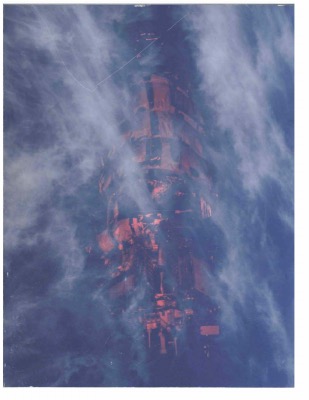 DOW-UAP-D172 BAASS Ten-Month Report, July 2009
7/30/09
-
 DOW-UAP-D173 BAASS Monthly Report, November 2009
11/1/09
-
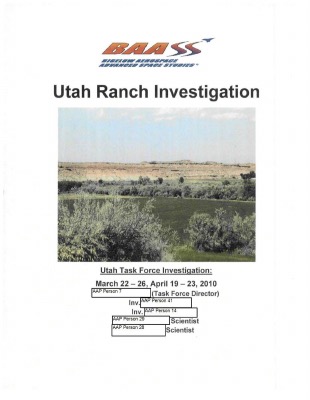 DOW-UAP-D174 Utah Ranch Investigation Report, April 2010
March, April 2010
-
 DOW-UAP-D175 BAASS Self-Assessment of UAP Analysis Capabilities, November 2010
11/23/10
-
 DOW-UAP-D182 AAWSAP Statement of Work, August 2008
8/22/08
-
 DOW-UAP-D184 AAWSAP Talking Paper for Senator Reid Engagement, May 2009
5/4/09
-
 DOW-UAP-D185 Review of AAWSAP Special Access Program Request, November 2009
11/13/09
-
 DOW-UAP-D186 DIA Information Memorandum on AATIP (AAWSAP), December 2010
December 2010
-
 DOW-UAP-D187 DIA Talking Paper for Senator Reid Engagement, January 2009
1/2/09
-
 DOW-UAP-D188 Review of AAWSAP Contract Deliverables October 2009
10/30/09