Text of page 31
UNCLASSIFIED//TO
the Qu Tube, or Supertube, is somewhat controversial.
According to the inventor (Patent No. 6,132,823) and to
claims by the company and their quoted results of tests
conducted by Stanford Research Institute, it reportedly
has an effective thermal conductivity of the order of 10
to 100 times greater than that of conventional liquid-va-
por heat pipes, and over 30,000 times that of an equiva-
lently sized solid rod of silver. Reports cited also have
indicated puzzling temperature distributions can occur
with these tubes, unlike conventional thermal conduc-
tors and liquid-vapor heat pipes. The tubes also appear
to have the ability to function at very high temperatures,
even up to the melting point of the materials used, and
to support very high heat fluxes. Our tests to date sup-
port the high temperature capabilities in addition to
the high thermal conductivities. However, the thermal
conductivity is so high that accurately measuring the
value is very difficult. We have therefore acquired nine
10' long Supertubes, 5/16" in diameter, and have set up
a method for determining the thermal conductivity us-
ing high heat flux, a water cooled calorimeter, and a rake
of over 30 carefully calibrated thermistors. This appara-
tus should provide an accurate means of determining the
thermal conductivity, and will also allow us to check the
high heat flux capability of the tube and to assess pos-
sible puzzling temperature distributions.
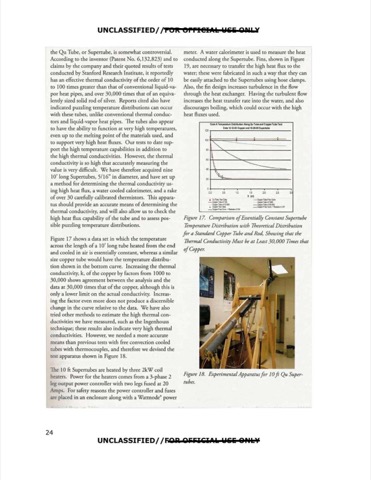
Figure 17 shows a data set in which the temperature
across the length of a 10' long tube heated from the end
and cooled in air is essentially constant, whereas a similar
size copper tube would have the temperature distribu-
tion shown in the bottom curve. Increasing the thermal
conductivity, k, of the copper by factors from 1000 to
30,000 shows agreement between the analysis and the
data at 30,000 times that of the copper, although this is
only a lower limit on the actual conductivity. Increas-
ing the factor even more does not produce a discernible
change in the curve relative to the data. We have also
tried other methods to estimate the high thermal con-
ductivities we have measured, such as the Ingenhouss
technique; these results also indicate very high thermal
conductivities. However, we needed a more accurate
means than previous tests with free convection cooled
tubes with thermocouples, and therefore we devised the
test apparatus shown in Figure 18.
The 10 ft Supertubes are heated by three 2k W coil
heaters. Power for the heaters comes from a 3-phase 2
leg output power controller with two legs fused at 20
Amps. For safety reasons the power controller and fuses
are placed in an enclosure along with a Wattnode power
24
UNCLASSIFIED// FOR
At
USE ONLY
meter. A water calorimeter is used to measure the heat
conducted along the Supertube. Fins, shown in Figure
19, are necessary to transfer the high heat flux to the
water; these were fabricated in such a way that they can
be casily attached to the Supertubes using hose clamps.
Also, the fin design increases turbulence in the flow
through the heat exchanger. Having the turbulent flow
increases the heat transfer rate into the water, and also
discourages boiling, which could occur with the high
heat fluxes used.
Case A Temperature Distributon Along Qu Tube and Copper Tube Test
Date 12-1305 Copper and 10-20-05 Supertibe
Takasatoo
Figure 17. Comparison of Essentially Constant Supertube
Temperature Distribution with Theoretical Distribution
for a Standard Copper Tube and Rod, Showing that the
Thermal Conductivity Must be at Least 30,000 Times that
of Copper.
Figure 18. Experimental Apparatus for 10 f: Qu Super-
tubes.
SE
ONLY