Text of page 37
THE AEROPLANE
favour of the "well-tried" convention
OT
" normal" wings
For these reasons, a study of the history of the use of low
aspect ratios in
wing design will be of interest.
Spiritually, the fathers of such
aeronautical exhibits were
Englishmen.
were people of good reputation and by
means suspect of aerodynamic perversion
Lanchester was undoubtedly the first aerodynamicist
to give thought to aeroplane wings of circular or square shape.
In his book published in 1907, he referred expressively to such
"apteroid" wing shapes (Fig. 2) and advanced the
Newton's law
The correctness
view was experimentally proved 30 years later
In a previous article on
* Stalling Characteristics of Tailless
(THE AEROPLANE for August 15, 1947), the early
interest taken by F. (now Sir Frederick) Handley Page in the
stalling qualities of wings of low aspect ratio was mentioned.
He showed, in a paper read in April, 1911, that marginal vortices
and pressure-equalizing flow around the tips were responsible
for the delay of flow separation which had been observed at
He stated, in this connection:—"
•.. With planes of high
aspect ratio (i.e.,
with
slender
wings of normal span/chord
ratio), there is not the same facility
for the " feeding in" of
fresh air at the plane sides (i.e., at the wing tips) to act as a
link between the plane and the live stream, and therefore the
live stream leaves the plane's back at an earlier stage than in
the case of the plane of lower aspect ratio..
He then
showed some experimental evidence
separation with decrease of the aspect ratio and for the greater
maximum lift of such wings.
When Lanchester published his book, man was just begin-
ning to spread his wings, and in order to fly with a minimum
expenditure in power, wings of fair aspect ratio were a neces-
Nevertheless, there were a few early aeroplanes, notably
the little " Demoiselle
monoplane of Santos Dumont (1909.
1910), which had an aspect ratio of only 2 and proved to be
One of the earliest attempts at a genuine "apteroid " aero-
plane was an experiment by
a German architect, Flick-Reinig
(1910). It had a span of 7) ft., and performed in hops only.
186
FEBRUARY 13, 1948
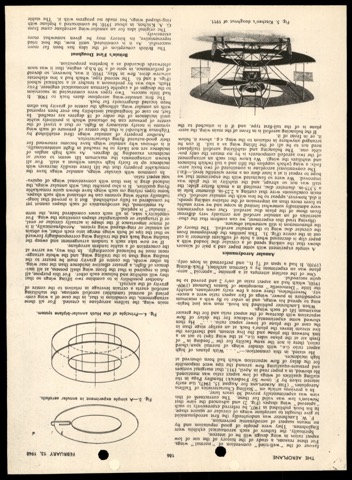
Fig. 3.—A simple experiment in annular aerofoils.
A simple experiment with some paper and a pair of scissors
shows that the sinking speed of a circular disc loaded with a
paper clip is decreased when a hole of sufficient diameter is cut
out in the centre (Fig. 3).
This justifies the development from
the circular disc wing to the annular aerofoil.
The theory of
the phenomenon is still somewhat obscure.
(Having tried this experiment, we can confirm that the char-
acteristics of an annular aerofoil are certainly very different
from those of the plain disc
Our own experiments
were admittedly somewhat limited in scope and we were unable
to form more than an impression of the relative sinking speeds:
it did, however, appear to be less with the annular aerofoil. Our
main conclusions were that cutting a 2.25-in. diameter hole in
a 5.375-in. diameter disc, resulted in a much flatter glide; the
stall was not so abrupt, and the stability in the glide was
We were so fascinated with the experiment that we
hope to repeat it at a later date on a more scientific level.Ep.)
The conventional aeroplane is constituted of two basic aero-
foils: a wing (which supplies the lift) and a tail (which balances
and stabilizes the wing).
We know that such an arrangement
of the two aerofoil components is by no means the only pos-
The balancing and stabilizing aerofoil (tailplane)
need not to be aft of the lifting wing as a tail.
arranged anywhere in relation to the wing, e.g.. above it, below
If the balancing aerofoil is in front of the main wing. the aero-
plane is of the tail-first type, and if it is attached to the
Fig. 5. Kitchen's doughnut of 1911.
Fig. 4.—Principle of the Huth annular-biplane system.
main wing, the tailless aeroplane is created. For all these
arrangements, the condition is that, in the case of a wing com-
prised of normal (unstable) aerofoil sections, the stabilizing
aerofoll exerts a certain leverage in relation to the centre of
Another possibility is to combine two lifting wings so that
they will stabilize and balance each other.
For this purpose, all
that is required is that the front wing shall possess, at all inci-
dences of-flight, a greater effective incidence than the rear wing.
In other words,
the centre of gravity must be nearer to the
leading wing than to the trailing wing,
and the whole arrange-
ment must be balanced accordingly.
In this way, we arrive at
the conception of a stable tandem aeroplane.
If we now take such a tandem arrangement and sweep the
leading wing back and the trailing wing correspondingly forward
so that the tips of both wings merge into each other, we obtain
an annular or ring-shaped wing system.
Aerodynamically, it is
of minor importance if the shape is actually circular or oval,
or if triangular or quadrangular shapes constitute the wing.
simplicity's sake, in all such cases considered here, the term
" annular" is applied.
As mentioned,
the aerodynamics of such shapes cannot yet
be considered as fully established.
But it is proved that longi-
tudinally stable wing systems can be obtained with such shapes.
Some types relying on such wings have shown quite remarkable
It is also possible that, with annular wings, the
induced drag is less than with conventional wings of equiva-
tent aspect ratio.
In common with circular wings, annular wings have the
remarkable property that the lift force steadily increases with
incidence up to fairly high values without a stall.
known arrangements the
maximum lift seems to occur at
As such high angles of
incidence are not likely to be reached in flight unintentionally.
it is obvious why annular wings have become renowned for
their good-natured flying characteristics.
Tilghman Richards) is that the centre of pressure of such wing
systems is nearly stationary in flight, or that a travel of the
centre of pressure can be obtained which is positively stable
until incidences of the order of 18 degrees are reached.
fact, no case of longitudinal instability has ever been reported
with an annular wing, although the centre of gravity has often
been located dangerously far back.
The first annular-wing aeroplane dates back to 1908.
had little success.
Two types were constructed in succession
to the designs of a capable German aeronautical engineer, Fritz
Huth, who was by profession a teacher at a technical school
The second type, which had a less elaborate
airscrew drive, flew in May, 1910; it was, however, so devoid
of performance, in spite of a 50 b.h.p. engine, that it was soon
afterwards discarded as a hopeless proposition.
Britain's First Doughnut
The British conception of the idea has been far more
successful.
As it is constituted,
until now, the best
representative,
its history may be given
tried
extensively:
somewhat
more
The original idea for an annular-wing aeroplane came from
G. A. Kitchen, in about 1910; he constructed a biplane with
ring-shaped wings, but made no progress with it. The stable
NND 927545