Text of page 36
FEBRUARY 13,
1948
185
The Biolog
of the Flying Saucer-I
The Story of Low Aspect Ratio Aircraft
By A. R. Weyl, A.F.R.Ae.S.
THE AEROPLANE
on
both sides of the
Atlantic rushed into print with claims of having observed
queer, saucer-shaped aircraft which flew very fast.
Some main-
tained, indeed, that they had seen squadrons of such mysterious
objects; others described vividly how these celestial saucers were
able to descend vertically.
All agreed on the saucer-like shape.
Sceptics considered that, for non-aeronautical people living
far from the former playgrounds of V.I. V.2, and all the rest
of Hitler's " civilizatory
practices, flying saucers might indeed
constitute phenomena of threatening aspect, from their expert-
ence of domestic disagreements.
Doctors, however, hastened to
assure the World that saucer-shaped or lenticular objects could
well be nothing more than specks in the lenses of the eyes of the
observers--the so-called musae volantes associated with high
blood pressure.
Teetotallers blamed the sorry consequences of
imbibing intoxicating liquors for the observations.
On the
other hand, the U.S. Air Force considered the matter serious
enough to warrant investigations into the incidents which had
been reported.
In the meantime, the occurrence of Flying Saucers has ceased
to be news.
Presumably, they have all landed.
[A new crop
was reported in THe AEROPLANe for January 16 last under the
"Tuppence Coloured." —ED.]
Aeronautical Antiquities and Iniquities
As a matter of fact, saucer-shaped aeroplanes are not quite
as new as some people have tried to make out.
(Fig. 1.)
Quite
a number of aircraft have
been
constructed and flown with
wings of the ring or disc type which could well have been mis-
taken
for
saucers.
hat-brims.
spades, doughnuts,
diamonds,
Greek letters, pancakes, flat-fish, geometrical symbols, dinner
plates, and other entirely non-aeronautical commodities.
Moreover, it is quite true.
and not even a minor secret, that,
at present, aeronautical engineers are paying increased attention
to
such
queer
wing shapes;
disc wings,
for instance. permit
certain disadvantages of conventional wings to be overcome.
It
is even thought that such shapes have been neglected too long.
The blame for their neglect can be ascribed to the doctrine
of the induced drag.
When the
Lanchester-Prandt]
theory became recognized nearly 30 years ago, and when the
sailplane movement proved that slender wings were a necessity
for soaring, designers began striving after " good"
The theory blinded their eyes agains: the possibilities of other
than conventional wings.
This, however, was not the fault of
the theory, as Prandtl soon showed its restrictions.
We have now come to reconsider the matter of wing shape
in an objective way, as it is quite possible that aircraft design
is approaching a cul-de-sac so long as it retains its bias in
Apteroid
Aerofoil
(b 1
c- 6)
CROSS - SECTION
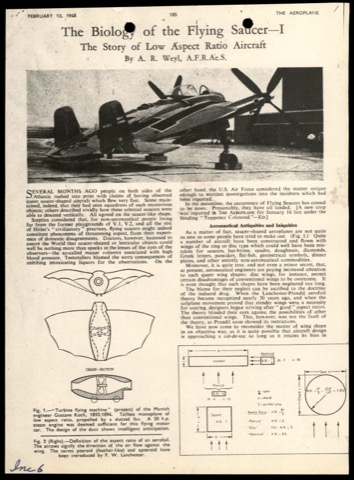
Fig. 1.-"Turbine flying machine" (project) of the Munich
engineer Gustave Koch,
1893/1894.
Tailless monoplane of
low aspect ratio, propelled by a ducted fan.
A 50 h.p.
steam engine was deemed sufficient for this flying, motor
car.
The design of the duct shows intelligent anticipation.
Fig. 2 (Right).—Definition of the aspect ratio of an aerofoil.
The arrows signify the direction of the air flow against the
wing. The terms pteroid (feather-like) and apteroid have
been introduced by F. W. Lanchester.
Inc 6
NND 927545
Square
AR
b- span
c chord
Sacrofoil area
Aspect Ratie. AR. b
"Pteroid"
AR >3
"Disc""
05K A.R. < 3
"Apteroid"
A R. < 0-5
(2)%
- 1.275