Text of page 41
UNCLASSIFIED/ FOR OFFICIAL USE ONLY
3.13 J. Khachan, A. Samarian, "Dust diagnostics on an inertial electrostatic
confinement discharge", Phys. Letters A, vol. 363, no. 4 (2007) pp. 297-301.
3.14 L. Blackhall, J. Khachan, "A simple electric thruster based on ion charge
exchange", vol. 40, No. 8, 2007) pp. 2491-2494.
Section IV. IEC Theory
Early basic IEC theory was briefly
described in Section I. Section IV will
now turn to some more recent studies
Onion-shaped
B
conductor
e emitter
-W. KV
starting with an early study by Bill
Nevins (Reference 4.1) that has caused
concern in the community about the
suitability of the IEC for a fusion power
reactor. Nevins did a semi analytic
analysis where IEC systems are
predicated including a non-equilibrium
ion distribution function. Coulomb
collisions between ions cause this
distribution to relax to a Maxwellian on
the ion-ion collisional time scale. His
analysis suggests that the input power
required to prevent this relaxation, thus
maintaining the IEC configuration for
times beyond the ion-ion collisional time
scale, is greater than the fusion power
produced. Thus, he concluded that IEC
systems show little promise for the
development of commercial electric
power plants. Nevin's analysis appears
Reflector
Superconducting
-W. KV - few V
magnet
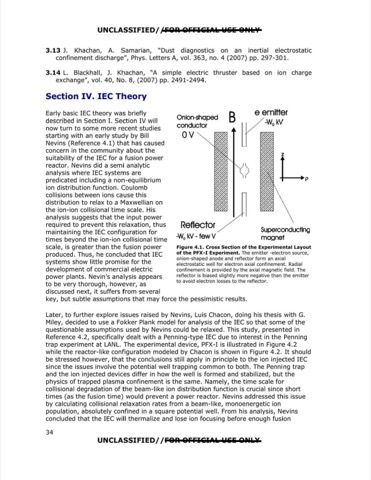
Figure 4.1. Cross Section of the Experimental Layout
of the PFX-I Experiment. The emitter -electron source,
onion-shaped anode and reflector form an axial
electrostatic well for electron axial confinement. Radial
confinement is provided by the axial magnetic field. The
reflector is biased slightly more negative than the emitter
to avoid electron losses to the reflector.
to be very thorough, however, as
discussed next, it suffers from several
key, but subtle assumptions that may force the pessimistic results.
Later, to further explore issues raised by Nevins, Luis Chacon, doing his thesis with G.
Miley, decided to use a Fokker Plank model for analysis of the IEC so that some of the
questionable assumptions used by Nevins could be relaxed. This study, presented in
Reference 4.2, specifically dealt with a Penning-type IEC due to interest in the Penning
trap experiment at LANL. The experimental device, PFX-I is illustrated in Figure 4.2
while the reactor-like configuration modeled by Chacon is shown in Figure 4.2. It should
be stressed however, that the conclusions still apply in principle to the ion injected IEC
since the issues involve the potential well trapping common to both. The Penning trap
and the ion injected devices differ in how the well is formed and stabilized, but the
physics of trapped plasma confinement is the same. Namely, the time scale for
collisional degradation of the beam-like ion distribution function is crucial since short
times (as the fusion time) would prevent a power reactor. Nevins addressed this issue
by calculating collisional relaxation rates from a beam-like, monoenergetic ion
population, absolutely confined in a square potential well. From his analysis, Nevins
concluded that the IEC will thermalize and lose ion focusing before enough fusion
34
UNCLASSIFIED//FOR
AL USE ONLY