Text of page 47
UNCLASSIFIED//Fe
-USE O
Planets
Lunar
Orbits
Waste Storage and
Processing Orbits
GEO
Platforms
Communications
Satellite
Constellations
LEO
MEO
HEO
Space Based
Warning
Lunar
Spaceport
Planetary
Exploration
Orbital
Transfer
Vehicle
Navigation
Weather
Space
Cruiseship
GEO
E Satellites,
Fuel Station
Spaceports
LEO-Lunar
Routes
RLV Launch
Geostationary Orbit
Communications
Warning
Space Based
Tracking
Space Station
Orbit
6
* Orbital
Mapping
Space Deployment/
Servicing
Vehicle
Retrieval Excursion
Vehicle
Vehicle
Hotels
Orbit Sweep
Vehicle
Man-tended
Manufacturing
Manufacturing
Where is our railroad to space
Where are the round trips
Low and Medium
Earth Orbits
Growth of the Spaceways Routes
From Dr. William Gaubatz
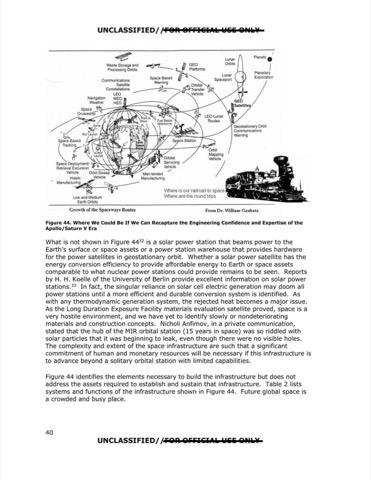
Figure 44. Where We Could Be If We Can Recapture the Engineering Confidence and Expertise of the
Apollo/Saturn V Era
What is not shown in Figure 4432 is a solar power station that beams power to the
Earth's surface or space assets or a power station warehouse that provides hardware
for the power satellites in geostationary orbit. Whether a solar power satellite has the
energy conversion efficiency to provide affordable energy to Earth or space assets
comparable to what nuclear power stations could provide remains to be seen. Reports
by H. H. Koelle of the University of Berlin provide excellent information on solar power
stations.33 In fact, the singular reliance on solar cell electric generation may doom all
power stations until a more efficient and durable conversion system is identified. As
with any thermodynamic generation system, the rejected heat becomes a major issue.
As the Long Duration Exposure Facility materials evaluation satellite proved, space is a
very hostile environment, and we have yet to identify slowly or nondeteriorating
materials and construction concepts. Nicholi Anfimov, in a private communication,
stated that the hub of the MIR orbital station (15 years in space) was so riddled with
solar particles that it was beginning to leak, even though there were no visible holes.
The complexity and extent of the space infrastructure are such that a significant
commitment of human and monetary resources will be necessary if this infrastructure is
to advance beyond a solitary orbital station with limited capabilities.
Figure 44 identifies the elements necessary to build the infrastructure but does not
address the assets required to establish and sustain that infrastructure. Table 2 lists
systems and functions of the infrastructure shown in Figure 44. Future global space is
a crowded and busy place.
40
UNCLASSIFIED//FOR OFFICIAL USE ONLY