DOW-UAP-D119

AAWSAP DIRD, Biomaterials, January 2010, page 28

One page of a U.S. government record released under PURSUE, shown on its own with its text. The record page has the whole document, its catalog details and the scan.

Page
28 of 32
Agency
Department of War
Released
Release 06, September 18, 2026

Text of page 28

UNCLASSIFIED//FOR O USE ONLY the active agent in a biodegradable polymer, as shown in Figure 28. The polymer host to the drug dissolves, releasing the drug in a controlled manner over time. polymer drug time - 0 time - t Figure 26. Schematic Representation of Biodegradable (Bioerodible) Drug Delivery Device The use of biodegradable materials allows the drug to be introduced without much concern for the build-up of the polymer carrier. The carrier is eventually absorbed by the body and, thus, need not be removed surgically. Drug diffusion through the polymer matrix can also determine the drug dosage rate without actual loss of the polymer. This rate is determined by the choice of polymer, the size of its pores, and the rate at which the drug diffuses from the pores. The three key advantages polymeric drug delivery products can offer are: • Localized Delivery of Drugs: The polymer-drug combination can be implanted directly at the site where drug action is needed and, hence, whole-body exposure of the drug can be reduced. This becomes especially important for toxic drugs, such as the chemotherapeutic drugs. • Sustained Delivery of Drugs: Once injected, the encapsulated drug is released over extended periods, thereby eliminating the need for multiple injections. This feature can improve patient compliance, especially with drugs for chronic indications that require frequent injections (such as for deficiency of certain proteins). • Stabilization of the Drug: The polymer can protect the drug from the physiological environment and hence improve its stability in vivo. This particular feature makes this technology attractive for the delivery of labile drugs, such as proteins. 21 UNCLASSIFIED/ /FOR OFFICIAL USE ONLY

Machine-read (OCR) from the scan by this archive; it can contain errors. The scan is the record.
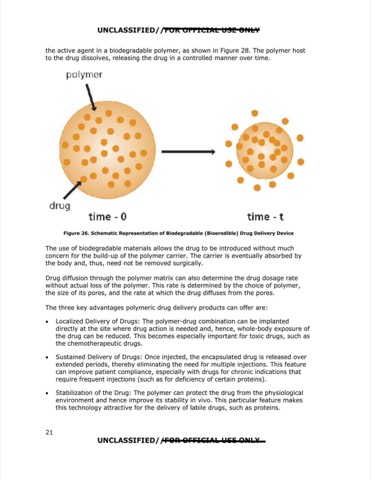
Image from page 28 of DOW-UAP-D119, as released by war.gov
Image from page 28 of the PDF. Open the scan to see the whole page.

Cite this page

U.S. Department of War. "AAWSAP DIRD, Biomaterials, January 2010" (DOW-UAP-D119). PURSUE Release 06, U.S. Department of War, September 18, 2026. https://www.war.gov/medialink/ufo/sept-18/release-06/assets/DOW-UAP-D119_AAWSAP-DIRD-Biomaterials-January-7-2010.pdf. Declassified UAP, page 28, https://declassifieduap.org/r/dow-uap-d119-aawsap-dird-biomaterials-january-2010/p/28. Accessed November 28, 2026.

This address shows page 28 on its own; /r/dow-uap-d119-aawsap-dird-biomaterials-january-2010?page=28 opens the same page in the full reader. Both stay. How to cite.