DOW-UAP-D119

AAWSAP DIRD, Biomaterials, January 2010, page 24

One page of a U.S. government record released under PURSUE, shown on its own with its text. The record page has the whole document, its catalog details and the scan.

Page
24 of 32
Agency
Department of War
Released
Release 06, September 18, 2026

Text of page 24

UNCLASSIFIED/ TOR OI At UsE oNLY A problem most materials cause when in blood contact is that they trigger the rapid formation of thrombus (an aggregation of blood cells). The formation of a thrombus is dangerous, as the thrombus could either adhere to the surface of the biomaterial or be detached. If a thrombus is detached, it can travel in the blood stream and occlude smaller vessels in the brain (called a stroke) or lungs (called an embolism). Some small-diameter vascular grafts (< 5-millimeter internal diameter) and prostheses for reconstruction of diseased veins are "safe" only when anticoagulant drugs are used. In addition to thrombus formation, biomaterials can become colonized with infection- causing bacteria. Some microorganisms found in hospitals are extremely resistant to antibiotic therapy, and infections cannot be fully resolved until the biomaterial is removed. This is particularly a problem with hip and knee implants, where there is poor blood flow near the joint and the body's immune system has limited access. Methicillin- resistant staphylococcus aureus infections are dangerous in these situations. The high tolerance of the body for woven and formed Teflon allows it to be used as a flexible patch material for other blood-contacting surfaces, in addition to blood vessels. For example, Gore, Inc., makes a Teflon-based material that is used to patch holes in the heart of infants born with atrial septal defects. Figure 23 is an artist's conception of how the patch is inserted into the hole in the atrial wall using a catheter. Figure 23. Illustration of Treatment of an Atrial Septal Defect Using a Teflon-Based Product Manufactured by Gore, Inc. 17 UNCLASSIFIED//FOR OFFICIAL USE ONLY

Machine-read (OCR) from the scan by this archive; it can contain errors. The scan is the record.
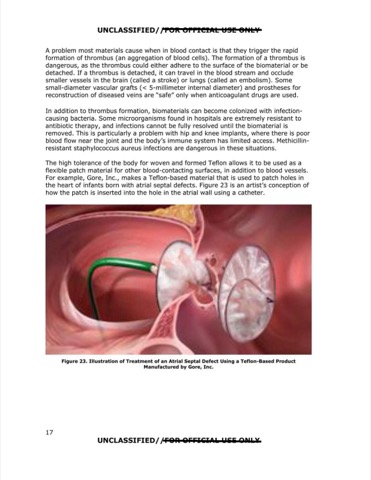
Image from page 24 of DOW-UAP-D119, as released by war.gov
Image from page 24 of the PDF. Open the scan to see the whole page.

Cite this page

U.S. Department of War. "AAWSAP DIRD, Biomaterials, January 2010" (DOW-UAP-D119). PURSUE Release 06, U.S. Department of War, September 18, 2026. https://www.war.gov/medialink/ufo/sept-18/release-06/assets/DOW-UAP-D119_AAWSAP-DIRD-Biomaterials-January-7-2010.pdf. Declassified UAP, page 24, https://declassifieduap.org/r/dow-uap-d119-aawsap-dird-biomaterials-january-2010/p/24. Accessed November 28, 2026.

This address shows page 24 on its own; /r/dow-uap-d119-aawsap-dird-biomaterials-january-2010?page=24 opens the same page in the full reader. Both stay. How to cite.