Text of page 15
UNCLASSIFIED/ / FOR OFFICIAL USE ONLY
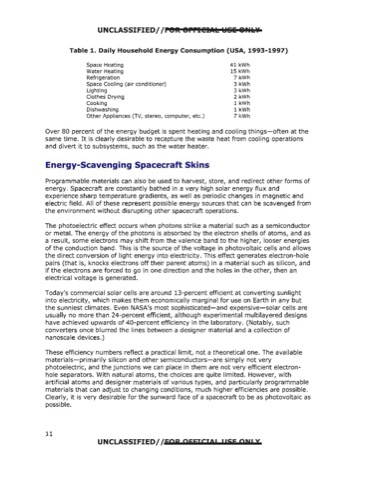
Table 1. Daily Household Energy Consumption (USA, 1993-1997)
Space Heating
41 kWh
Water Heating
15 kWh
Refrigeration
7 kWh
Space Cooling (air conditioner)
3 kWh
Lighting
3 kWh
Clothes Drying
2 kWh
Cooking
1 kWh
Dishwashing
1 kWh
Other Appliances (TV, stereo, computer, etc.)
7 kWh
Over 80 percent of the energy budget is spent heating and cooling things-often at the
same time. It is clearly desirable to recapture the waste heat from cooling operations
and divert it to subsystems, such as the water heater.
Energy-Scavenging Spacecraft Skins
Programmable materials can also be used to harvest, store, and redirect other forms of
energy. Spacecraft are constantly bathed in a very high solar energy flux and
experience sharp temperature gradients, as well as periodic changes in magnetic and
electric field. All of these represent possible energy sources that can be scavenged from
the environment without disrupting other spacecraft operations.
The photoelectric effect occurs when photons strike a material such as a semiconductor
or metal. The energy of the photons is absorbed by the electron shells of atoms, and as
a result, some electrons may shift from the valence band to the higher, looser energies
of the conduction band. This is the source of the voltage in photovoltaic cells and allows
the direct conversion of light energy into electricity. This effect generates electron-hole
pairs (that is, knocks electrons off their parent atoms) in a material such as silicon, and
if the electrons are forced to go in one direction and the holes in the other, then an
electrical voltage is generated.
Today's commercial solar cells are around 13-percent efficient at converting sunlight
into electricity, which makes them economically marginal for use on Earth in any but
the sunniest climates. Even NASA's most sophisticated-and expensive-solar cells are
usually no more than 24-percent efficient, although experimental multilayered designs
have achieved upwards of 40-percent efficiency in the laboratory. (Notably, such
converters once blurred the lines between a designer material and a collection of
nanoscale devices.)
These efficiency numbers reflect a practical limit, not a theoretical one. The available
materials-primarily silicon and other semiconductors-are simply not very
photoelectric, and the junctions we can place in them are not very efficient electron-
hole separators. With natural atoms, the choices are quite limited. However, with
artificial atoms and designer materials of various types, and particularly programmable
materials that can adjust to changing conditions, much higher efficiencies are possible.
Clearly, it is very desirable for the sunward face of a spacecraft to be as photovoltaic as
possible.
11
UNCLASSIFIED//EAR DEEICIAL USE ONLY