Text of page 40
THE AEROPLANE
280
MARCH 5, 1948
argument against disc wings,
The best aerofoil sections in use
prior to about 1925 had a plain camber which implies travel of
the centre of pressure when the incidence varies; the length of
such travel is linked up with the wing chord
Hence the change
in trim or stability is,
with such aerofoil sections, greater with
large-chord wings.
On
this
consideration
of
fore-and-aft
stability and control, designers had some justification for their
decision against experimenting with disc wings.
discisio aerofoil sectors ed already been used in fishe while
had practically no travel of the centre of pressure and hence
did not suffer from this disadvantage of the disc wing.
The whole argument, however,
lost its importance imme-
diately M. M. Munk proved that very efficient aerofoil sections
could be designed with a completely (or nearly so) stationary
centre of pressure.
It is, therefore, right to say that from that
time all conditions existed for a practical evolution of disc-wing
aeroplanes.
F. Handley Page converted an aerofoil, leaving an aspect
ratio of 6.25, into six square-aerofoil portions by five slots.
each parallel to the chord of the wing.
By so doing he hoped
to have the low drag of a normal wing combined with the high
stalling angle of
the disc-type
slight improvement
wing
Although a very
was claimed, the principle was that of
eating the cake and having it too: the induced drag is respon-
sible for the stalling properties of the disc wing and you cannot
have the benefits of the high drag without suffering its disad-
vantages.
Moreover, in order to
have the effect of the disc
wing, the provision of mere slots is insufficient.
vortices need room to deploy
On the whole, however, the idea proves that at least one
practical aircraft designer had realized that there was some-
thing in wings of abnormally small aspect ratio.
There were other, although not quite as well thought out,
antecedents of the disc-wing aeroplane.
In the first soaring-
flight competition on the Rhoen
(1920), Friedrich Richter, a
urly naval pilot of 20 stone or so, performed on a triplan
lider with wings having an individua
aspect ratio of far less
than three.
H. Hayden secured, in 1922, a patent for a rhom-
boidal wing with an aspect ratio of nearly unity, claiming for
such a shape high lift and good flying qualities.
In 1925 he constructed a glider with a wing having an aspect
ratio of only 2.25.
The wing was nearly triangular in shape,
with its apex leading, and a pronounced wash-out towards the
tips (Fig. 12); no lateral controls were fitted.
The tailplane
with the elevator was fitted underneath the trailing edge at the
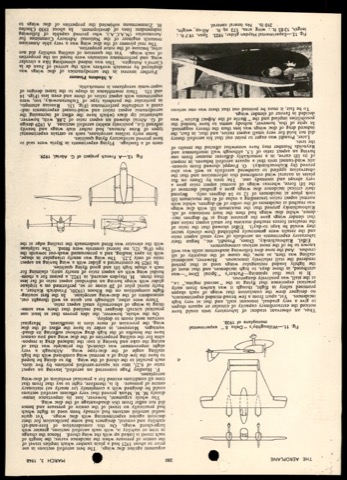
Fig. 11.-Willoughby's " Delta 8" experimental
monoplane of 1938.
an observant student of laboratory
could have
noticed the extraordinary capacity of circular or square shapes
and that at very high
Yet, apart from a few broad-minded experimenters,
no designer drew the conclusion that wings of such shapes
promised safety
practisad experience that Aying in the
though it was known from
" second regime,,Carly
at the stall, was positively dang Pous.
-Parker's " Spiral Dive"—-was
attributed, in those days, to high incidences, and that most of
the lightly loaded rectangular wings used at
that period
rendered the stall relatively innocuous.
However, accidental
stalling was then, as now,
the cause of the majority of all
And the nose dive following inadvertent stalls was well
known to be of the most serious consequences.
laboratory experiments on aerofoils of very small aspect ratio
and the results were generously published (how closely secret
they would be kept to-day!).
Eiffel showed that the ratio of
the resultant forces reached maxima for small aspect ratios and
that slender wings gave the
greatest drag at 90 degrees inci-
. dence, whilst disc wings had then the
least resistance of all.
Riabouchinsky proved that the maximum lift with disc wings
was reached at incidences of the order of 40 degrees, whilst with
normal aspect ratios (exceeding a value of 4) the maximum lift
took place at incidences of 12
to 14 degrees. only.
their critical incidence disc wings gave a gradual decrease
whereas wings of normal aspect ratio gave
very abrupt and unsteady
tests by Dines on flat
plates in natural wind confirmed this information and that the
cambered aerofoils as well was also
proved (by Riabouchinsky).
O. Foeppl showed from system-
atic wind-tunnel tests that a square aerofoil behaves, in respect
of its lift curve, in a remarkably different manner from one
having an aspect ratio of 1.5,
although wall interference and
Reynolds Number may have somewhat affected the results of
Later, Prandtl was eager to point out that his aerofoil theory
did not hold for very small aspect ratios, and that, in fact, the
induced drag of disc wings was less than the theory suggested.
In spite of this, however, nobody
seems to have heeded the
possibilities implied and the " Battle of the Aspect Ratios" was
decided in favour of slender wings.
To be fair, it must be pointed out that there was one serious
Fig. 13.—A French project of G. Abrial, 1929.
Fig. 12.—Experimental Hayden glider, 1925.
Span, 19.7 ft. :
length, 13-85 ft.; wing area,
173 sq. ft.
All-up. weight,
No lateral control.
stern of a fuselage.
Flying experiments in Styria were said to
have proved satisfactory flying qualities.
Some early tailless aeroplanes, such as certain expérimental
types of Rene Arnoux,
had rather stub wings
and heavily
reflexed (i.e., positively stable) aerofoil sections
A 1929 design
of G. Abrial showed an aspect ratio of 2.88. with, however
substantial tip discs (which have the effect of increasing the
aerodynamic aspect ratio) and wind-tunnel experiments indi-
cated a creditable performance (Fig.
13).
Russian attempts.
in particular the parabola type of Tscheranowsky, too,
were
experiments with aspect ratios of three and even less (Figs. 14
and 15).
Their resemblance in shape to the latest designs of
super-sonic aeroplanes is remarkable.
A Modern Pioneer
Further interest in the aerodynamics of dise wings was
displayed by research workers with the arrival of Juan de la
Cierva's Autogiro.
This was indeed something like a circular
wing, and performance estimates were based on the properties
of such wings.
Yet the question of stalling stability did not
arise, because of the rotor properties.
research engineer of the
Sare heal miner of the ation Advisor cole econ
Committee for
Aeronautics
(N.A.C.A.),
who proved
independent lines of development.
a capable of follow to
In about 1930 Charles
H.
Zimmermann subjected
the properties of disc wings to
NND 927545