DOW-UAP-D172

BAASS Ten-Month Report, July 2009, page 136

One page of a U.S. government record released under PURSUE, shown on its own with its text. The record page has the whole document, its catalog details and the scan.

Page
136 of 538
Agency
Department of War
Released
Release 08, November 20, 2026

Archive note war.gov's data file does not mark this record as redacted, but the file carries FOIA exemption stamps (for example "(b)(3)") where material was withheld. See all corrections

Text of page 136

This information is proprietary and cannot be disseminated or used. without prior written consent from the Operating Manager of BAASS&. fatigue resistance, and could replace high-strength steels in certain load-limited structural components in aerospace vehicles where space is limited. Because they are true glasses, thermoplastic forming near the glass transition temperature affords metallic glasses tremendous flexibility in processing. For instance, metallic glass components can be formed in a single step (e.g. by injection molding) in complex geometries that would be difficult or impossible to produce with conventional alloys. In addition, metallic glass foams can be made with relative ease, raising the possibility of making structural foams with high strength and stiffness. Finally, because they lack a crystalline grain structure, metallic glasses can be used to form nanoscale features with high fidelity. This may make metallic glasses useful in a variety of micro- electromechanical systems (MEMS) applications. Metallic glasses also have significant limitations for aerospace applications, however. Foremost among these is a lack of good glass-forming alloys; in particular, there are no good aluminum-rich glass-forming alloys, the known titanium-based alloys are either relatively dense (due to high concentrations of alloying elements) or contain beryllium, and the known magnesium- and iron- based alloys are all quite brittle, with low fracture toughness. Although metallic glass matrix composites can have outstanding properties (particularly strength and fracture toughness), the number of good composite systems known at present is also quite limited. Therefore, in order for metallic glasses (and their composites) to be of broad utility in aerospace structural applications, progress in the following areas is required: 1. Development of new lightweight alloys and composite systems, preferably by computational and/or combinatorial approaches rather than trial and error; 2. Understanding of mechanical behavior, especially a. The effect of alloy composition and structure on plastic deformation Page 130

Machine-read (OCR) from the scan by this archive; it can contain errors. The scan is the record.
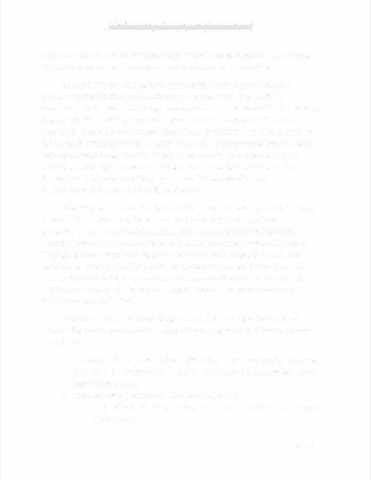
Image from page 136 of DOW-UAP-D172, as released by war.gov
Image from page 136 of the PDF. Open the scan to see the whole page.

Cite this page

U.S. Department of War. "BAASS Ten-Month Report, July 2009" (DOW-UAP-D172). PURSUE Release 08, U.S. Department of War, November 20, 2026. https://www.war.gov/medialink/ufo/docs-112026-release-08/DOW-UAP-D172-BAASS_Ten_Month_Report_July-2009.pdf. Declassified UAP, page 136, https://declassifieduap.org/r/dow-uap-d172-baass-ten-month-report-july-2009/p/136. Accessed November 28, 2026.

This address shows page 136 on its own; /r/dow-uap-d172-baass-ten-month-report-july-2009?page=136 opens the same page in the full reader. Both stay. How to cite.