Text of page 33
UNCLASSIFIED//FOR OF
AL Ust oNtY
HT'S Technology
High Temperature
Superconductor research
needs to be scaled up and
made to withstand the
fusion environment
• H Beam
Rotating Plasma
Conducting Wall
Alpha particle production
needs to be recycled via
beam direct conversion
with electron escape or
redirected back into reactor
for maximum thrust
Energy Recovery
+
+
External Current
Physical Modeling
*Не
Reaction Products
"He
He
"He
Plasma Physics
Magnetic Field
(FRO
The magnetic field separatrix
must be shaped for optimal
confinement, minimal leakage
and maximum stability
Plasma Current
B Beam
Plasma rings must be made stable
and achieve the right mix of density
and temperature for sustained
fusion and power recycling
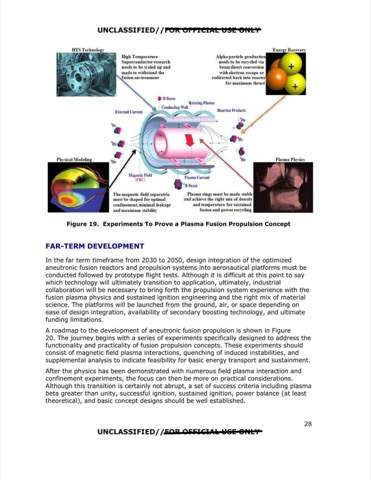
Figure 19. Experiments To Prove a Plasma Fusion Propulsion Concept
FAR-TERM DEVELOPMENT
In the far term timeframe from 2030 to 2050, design integration of the optimized
aneutronic fusion reactors and propulsion systems into aeronautical platforms must be
conducted followed by prototype flight tests. Although it is difficult at this point to say
which technology will ultimately transition to application, ultimately, industrial
collaboration will be necessary to bring forth the propulsion system experience with the
fusion plasma physics and sustained ignition engineering and the right mix of material
science. The platforms will be launched from the ground, air, or space depending on
ease of design integration, availability of secondary boosting technology, and ultimate
funding limitations.
A roadmap to the development of aneutronic fusion propulsion is shown in Figure
20. The journey begins with a series of experiments specifically designed to address the
functionality and practicality of fusion propulsion concepts. These experiments should
consist of magnetic field plasma interactions, quenching of induced instabilities, and
supplemental analysis to indicate feasibility for basic energy transport and sustainment.
After the physics has been demonstrated with numerous field plasma interaction and
confinement experiments, the focus can then be more on practical considerations.
Although this transition is certainly not abrupt, a set of success criteria including plasma
beta greater than unity, successful ignition, sustained ignition, power balance (at least
theoretical), and basic concept designs should be well established.
28
UNCLASSIFIED/ /EOR OFFICIAL USE ONLY