Text of page 23
UNCLASSIFIED FOR OFTETAL USE UNDY
Zenith
End of Laser
Rocket
Propulsion
Lighteraft
Earth-to-Orbit
Trajectory
End of Laser
Airbreathing
Propulsion
Vertical
Maximum
(Cut-Off)
Velocity
Lightcraft
Launch
Sensible
Atmosphere
TTIT
Ground
Based
Laser
(Not to Scale)
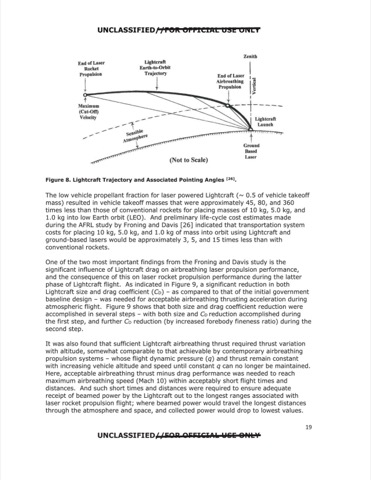
Figure 8. Lightcraft Trajectory and Associated Pointing Angles [26],
The low vehicle propellant fraction for laser powered Lightcraft (~ 0.5 of vehicle takeoff
mass) resulted in vehicle takeoff masses that were approximately 45, 80, and 360
times less than those of conventional rockets for placing masses of 10 kg, 5.0 kg, and
1.0 kg into low Earth orbit (LEO). And preliminary life-cycle cost estimates made
during the AFRL study by Froning and Davis [26] indicated that transportation system
costs for placing 10 kg, 5.0 kg, and 1.0 kg of mass into orbit using Lightcraft and
ground-based lasers would be approximately 3, 5, and 15 times less than with
conventional rockets.
One of the two most important findings from the Froning and Davis study is the
significant influence of Lightcraft drag on airbreathing laser propulsion performance,
and the consequence of this on laser rocket propulsion performance during the latter
phase of Lightcraft flight. As indicated in Figure 9, a significant reduction in both
Lightcraft size and drag coefficient (CD) - as compared to that of the initial government
baseline design - was needed for acceptable airbreathing thrusting acceleration during
atmospheric flight. Figure 9 shows that both size and drag coefficient reduction were
accomplished in several steps - with both size and Co reduction accomplished during
the first step, and further Co reduction (by increased forebody fineness ratio) during the
second step.
It was also found that sufficient Lightcraft airbreathing thrust required thrust variation
with altitude, somewhat comparable to that achievable by contemporary airbreathing
propulsion systems - whose flight dynamic pressure (q) and thrust remain constant
with increasing vehicle altitude and speed until constant q can no longer be maintained.
Here, acceptable airbreathing thrust minus drag performance was needed to reach
maximum airbreathing speed (Mach 10) within acceptably short flight times and
distances. And such short times and distances were required to ensure adequate
receipt of beamed power by the Lightcraft out to the longest ranges associated with
laser rocket propulsion flight; where beamed power would travel the longest distances
through the atmosphere and space, and collected power would drop to lowest values.
19
UNCLASSIFIED//FOR OFFI
AL USE ONLY