Text of page 10
UNCLASSIFIED/ FOR O
AL USE ONLY
CHEMICAL LASERS
Chemical lasers use a chemical reaction in gas or liquid to release the energy which
produces their lasing. A reaction can be initiated with an electric current, by light from
another source, or by simply mixing hypergolic chemicals. These lasers include familiar
low power, sealed gas types such as helium-neon, argon, or krypton-ion and typically
produce light in the visible or near infrared. Excimer lasers are another low average
power sub-category of gas lasers. These use dimer molecules as the lasing medium,
are generally electrically excited, and lase in the ultraviolet.
To-date, every laser which has been
scaled to MW-class average power falls
in the chemical category. They use
large quantities of rapidly flowing
chemicals to produce reactions which
then release the required energy. The
carbon dioxide laser (COz at 10.6 um)
was the first to be scaled to high power
around 1970 followed by the deuterium-
fluoride laser (DF at 3.8 um) and its first
cousin the hydrogen-fluoride laser (HF
at 2.8 um) in the mid-1970s. These
devices lase in the far- to mid-infrared
and depend on exciting vibrational and
rotational states of the lasing molecules.
COz, DF, and HF lasers resemble rocket
engines because they combust a fuel
with an oxidizer. The DF laser ignites a
mixture of nitrogen-trifluoride (NF3)
with ethylene (C2H4) and then injects
deuterium (an isotope of hydrogen) into
the exhaust stream to produce the
lasing molecule of deuterium-fluoride.
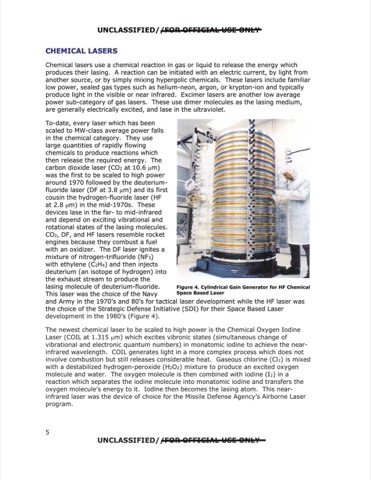
Figure 4. Cylindrical Gain Generator for HF Chemical
This laser was the choice of the Navy
Space Based Laser
and Army in the 1970's and 80's for tactical laser development while the HF laser was
the choice of the Strategic Defense Initiative (SDI) for their Space Based Laser
development in the 1980's (Figure 4).
The newest chemical laser to be scaled to high power is the Chemical Oxygen Iodine
Laser (COIL at 1.315 um) which excites vibronic states (simultaneous change of
vibrational and electronic quantum numbers) in monatomic iodine to achieve the near-
infrared wavelength. COIL generates light in a more complex process which does not
involve combustion but still releases considerable heat. Gaseous chlorine (Clz) is mixed
with a destabilized hydrogen-peroxide (H202) mixture to produce an excited oxygen
molecule and water. The oxygen molecule is then combined with iodine (I2) in a
reaction which separates the iodine molecule into monatomic iodine and transfers the
oxygen molecule's energy to it. Iodine then becomes the lasing atom. This near-
infrared laser was the device of choice for the Missile Defense Agency's Airborne Laser
program.
5
UNCLASSIFIED/ /FOR OFFICIAL USE ONLY