Text of page 14
UNCLASSIFIED/ /FOR OFFICIAL USE ONLY
Methods of creating a more sustained blood concentration of a given drug are desirable
to increase drug effectiveness. Similarly there are other medical applications for
controlled-release drug-delivery systems, such as that for insulin, where it is desirable
to maintain a more sustained dose over a period of hours.
There has been the application of MEMS technologies in the creation of better ways to
deliver drugs to the human body by way of small implantable reservoirs that can slowly
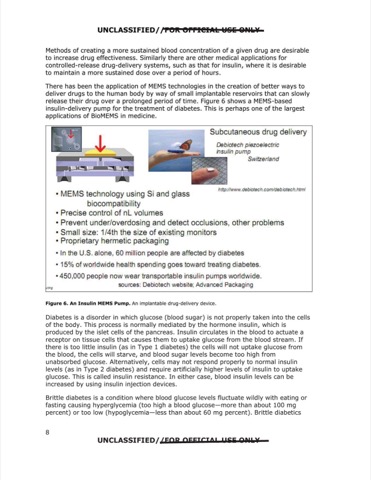
release their drug over a prolonged period of time. Figure 6 shows a MEMS-based
insulin-delivery pump for the treatment of diabetes. This is perhaps one of the largest
applications of BioMEMS in medicine.
Subcutaneous drug delivery
Debiotech piezoelectric
insulin pump
Switzerland
http://www.debiotech.com/debiotech.html
• MEMS technology using Si and glass
biocompatibility
• Precise control of nL volumes
• Prevent under/overdosing and detect occlusions, other problems
• Small size: 1/4th the size of existing monitors
• Proprietary hermetic packaging
• In the U.S. alone, 60 million people are affected by diabetes
• 15% of worldwide health spending goes toward treating diabetes.
• 450,000 people now wear transportable insulin pumps worldwide.
sources: Debiotech website; Advanced Packaging
Figure 6. An Insulin MEMS Pump. An implantable drug-delivery device.
Diabetes is a disorder in which glucose (blood sugar) is not properly taken into the cells
of the body. This process is normally mediated by the hormone insulin, which is
produced by the islet cells of the pancreas. Insulin circulates in the blood to actuate a
receptor on tissue cells that causes them to uptake glucose from the blood stream. If
there is too little insulin (as in Type 1 diabetes) the cells will not uptake glucose from
the blood, the cells will starve, and blood sugar levels become too high from
unabsorbed glucose. Alternatively, cells may not respond properly to normal insulin
levels (as in Type 2 diabetes) and require artificially higher levels of insulin to uptake
glucose. This is called insulin resistance. In either case, blood insulin levels can be
increased by using insulin injection devices.
Brittle diabetes is a condition where blood glucose levels fluctuate wildly with eating or
fasting causing hyperglycemia (too high a blood glucose-more than about 100 mg
percent) or too low (hypoglycemia-less than about 60 mg percent). Brittle diabetics
8
UNCLASSIFIED/ LEOR OFFICIAL LISE ONLY