Text of page 19
UNCLASSIFIED//FOR eFFICIAL USE ONLY
An issue develops when an entirely new device is considered. The form of the
movement control algorithm is similar to a population vector in that movement at each
time step is determined by a vector sum of the neurons' normalized firing rates
multiplied by a set of linear coefficients. Modern neuroscience has proven that tens of
thousands, even up to millions of neurons fire in concert to perform even the most
mundane of movements. These extended neural pathways developed through full-
duplex closed loop training. It will thus be quite an issue in an open-loop design to
develop an algorithm that can decode control signals for a system the brain has never
controlled before, say a 12-direction rocket stabilization system. 17 This places another
limitation on the open-loop model, even using complex nonlinear fitting, and has driven
development of the closed-loop model.
CLOSED-LOOP PERIPHERAL ARRAYS UTILIZING VISUAL FEEDBACK
In a closed-loop system that provides feedback to a control system, the differences
between the two models of movement become apparent. Sensory feedback within the
system is used for error correction of fine motor control, such as balance - without fine
motor control and error correction for balance, the human body could not stand up. In
the model with abstract cortical control, feedback corrections are processed externally
to the BMI and sensory feedback to the brain is usually limited to observation. This is a
subtle distinction between open-loop with visual feedback and closed-loop abstract
control that includes visual feedback. In the former, the visual feedback is intended to
show success of a control command being sent by the brain, whereas in the latter,
visual feedback is showing success of supervisory function of a semiautonomous
mechanical device.
Neural Recording
Network Interface
Architecture
Duke
USA
Multi-level
autonomous control
IST
JAPAN
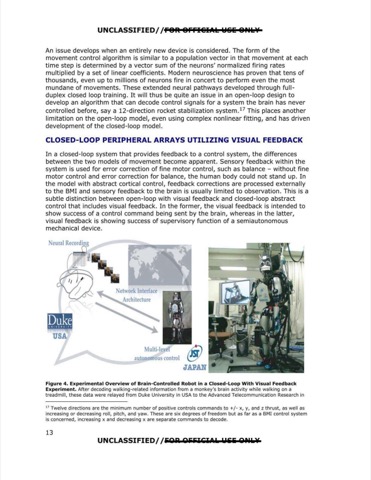
Figure 4. Experimental Overview of Brain-Controlled Robot in a Closed-Loop With Visual Feedback
Experiment. After decoding walking-related information from a monkey's brain activity while walking on a
treadmill, these data were relayed from Duke University in USA to the Advanced Telecommunication Research in
17 Twelve directions are the minimum number of positive controls commands to +/- x, y, and z thrust, as well as
increasing or decreasing roll, pitch, and yaw. These are six degrees of freedom but as far as a BMI control system
is concerned, increasing x and decreasing x are separate commands to decode.
13
UNCLASSIFIED/ /50
ONLY