Text of page 66
UNCLASSIFIED//FOR e
AL USE ONLY
In summary, if the physics principles
are demonstrated successfully, the
Field Rezion
Entering
Nill-Field
Regian
MCSA fusion power plant will offer
numerous advantages for space
propulsion as well as for terrestrial
power sources. The non-Maxwellian
plasma involved is well suited for
Trajectories wth
• Razidiam ibed
-Ehtance Arek
operation with D-3He fuel that provides
much of the energy output in the form
of very energetic 14-MeV protons.
Proton energy can be employed for
Particle To actores
wth Sigilkat m.
either direct conversion to electricity or
directed thrust. As demonstrated in the
Fusion Ship II design study, the MCSA
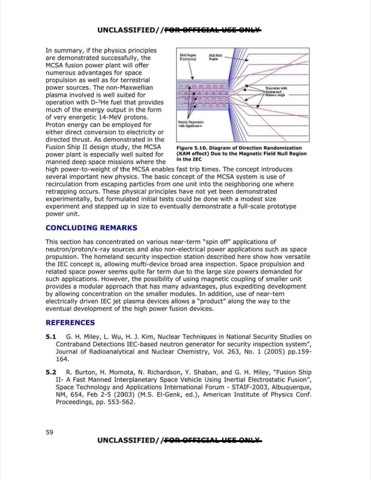
Figure 5.10. Diagram of Direction Randomization
power plant is especially well suited for
(KAM effect) Due to the Magnetic Field Null Region
manned deep space missions where the
in the IEC
high power-to-weight of the MCSA enables fast trip times. The concept introduces
several important new physics. The basic concept of the MCSA system is use of
recirculation from escaping particles from one unit into the neighboring one where
retrapping occurs. These physical principles have not yet been demonstrated
experimentally, but formulated initial tests could be done with a modest size
experiment and stepped up in size to eventually demonstrate a full-scale prototype
power unit.
CONCLUDING REMARKS
This section has concentrated on various near-term "spin off" applications of
neutron/proton/x-ray sources and also non-electrical power applications such as space
propulsion. The homeland security inspection station described here show how versatile
the IC concept is, allowing mufti-device broad area inspection. Space propulsion and
related space power seems quite far term due to the large size powers demanded for
such applications. However, the possibility of using magnetic coupling of smaller unit
provides a modular approach that has many advantages, plus expediting development
by allowing concentration on the smaller modules. In addition, use of near-tem
electrically driven IEC jet plasma devices allows a "product" along the way to the
eventual development of the high power fusion devices.
REFERENCES
5.1 G. H. Miley, L. Wu, H. J. Kim, Nuclear Techniques in National Security Studies on
Contraband Detections IEC-based neutron generator for security inspection system",
Journal of Radioanalytical and Nuclear Chemistry, Vol. 263, No. 1 (2005) pp.159-
164.
5.2 R. Burton, H. Momota, N. Richardson, Y. Shaban, and G. H. Miley, "Fusion Ship
II- A Fast Manned Interplanetary Space Vehicle Using Inertial Electrostatic Fusion",
Space Technology and Applications International Forum - STAIF-2003, Albuquerque,
NM, 654, Feb 2-5 (2003) (M.S. El-Genk, ed.), American Institute of Physics Conf.
Proceedings, pp. 553-562.
59
UNCLASSIFIED/ /FOR OFFICIAL USE ONLY