Text of page 49
UNCLASSIFIED//TOR OT
At ust oNty
A particle-in-cell method with explicit
time integration has generally
0.4
dominated earlier plasma simulations.
However, this method is inappropriate
in multiple time scale problems
0.3 -
primarily because the explicit time-step
algorithms become numerically unstable
when they cannot resolve the fastest
time scale supported by the model.
20.2
= 0.1
0 = 102
§ = 10'
k= 0.0
Indeed, the fastest time scale may be
orders of magnitude faster than the
0.0
dynamical time scale of interest. The
simulation also has to resolve the
smallest length scale of system to avoid
-0.104
LuIL
10-3
10'1
10°
finite-grid instabilities that require
resolution of spatial scales comparable
to the Debye length. In order to
improve the conservations property of
10-2
B
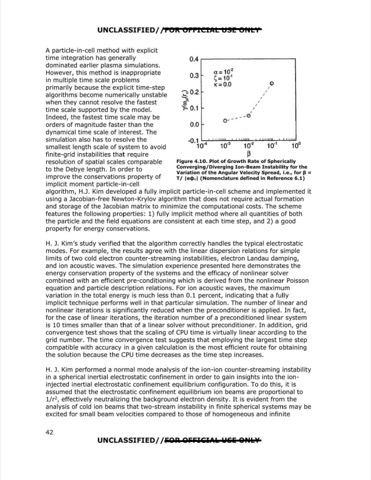
Figure 4.10. Plot of Growth Rate of Spherically
Converging/Diverging Ion-Beam Instability for the
Variation of the Angular Velocity Spread, i.e., for B =
T/ lec| (Nomenclature defined in Reference 6.1)
implicit moment particle-in-cell
algorithm, H.J. Kim developed a fully implicit particle-in-cell scheme and implemented it
using a Jacobian-free Newton-Krylov algorithm that does not require actual formation
and storage of the Jacobian matrix to minimize the computational costs. The scheme
features the following properties: 1) fully implicit method where all quantities of both
the particle and the field equations are consistent at each time step, and 2) a good
property for energy conservations.
H. J. Kim's study verified that the algorithm correctly handles the typical electrostatic
modes. For example, the results agree with the linear dispersion relations for simple
limits of two cold electron counter-streaming instabilities, electron Landau damping,
and ion acoustic waves. The simulation experience presented here demonstrates the
energy conservation property of the systems and the efficacy of nonlinear solver
combined with an efficient pre-conditioning which is derived from the nonlinear Poisson
equation and particle description relations. For ion acoustic waves, the maximum
variation in the total energy is much less than 0.1 percent, indicating that a fully
implicit technique performs well in that particular simulation. The number of linear and
nonlinear iterations is significantly reduced when the preconditioner is applied. In fact,
for the case of linear iterations, the iteration number of a preconditioned linear system
is 10 times smaller than that of a linear solver without preconditioner. In addition, grid
convergence test shows that the scaling of CPU time is virtually linear according to the
grid number. The time convergence test suggests that employing the largest time step
compatible with accuracy in a given calculation is the most efficient route for obtaining
the solution because the CPU time decreases as the time step increases.
H. J. Kim performed a normal mode analysis of the ion-ion counter-streaming instability
in a spherical inertial electrostatic confinement in order to gain insights into the ion-
injected inertial electrostatic confinement equilibrium configuration. To do this, it is
assumed that the electrostatic confinement equilibrium ion beams are proportional to
1/12, effectively neutralizing the background electron density. It is evident from the
analysis of cold ion beams that two-stream instability in finite spherical systems may be
excited for small beam velocities compared to those of homogeneous and infinite
42
UNCLASSIFIED//FOR
AL USE ONLY